21 Fun Facts About Trees That Will Blow Your Mind
-
The tallest known tree in the world is a coast redwood named Hyperion, which stands at 379.7 feet (115.7 meters).
-
The oldest known tree in the world is a bristlecone pine named Methuselah, which is over 4,800 years old.
-
Trees can live for thousands of years, with some species living for over 5,000 years.
-
Trees absorb carbon dioxide and release oxygen, making them essential for maintaining a healthy atmosphere.
-
Trees provide habitat and food for a wide variety of animals, including birds, insects, and mammals.
-
Trees can help reduce air pollution by absorbing pollutants and releasing clean oxygen.
-
Trees can also help reduce noise pollution by absorbing sound waves.
-
The leaves of some trees, such as the rubber tree, can be used to make rubber.
-
Some trees, such as the baobab tree, can store up to 120,000 liters of water in their trunks.
-
The roots of some trees, such as the mangrove tree, can help protect coastlines from erosion.
-
Trees can help cool the air by releasing water vapor through a process called transpiration.
-
Trees can also help prevent soil erosion by holding soil in place with their roots.
-
Trees can also help improve water quality by filtering pollutants from runoff.
-
Trees can also help reduce the urban heat island effect by providing shade and releasing moisture.
-
The sap of some trees, such as the maple tree, can be used to make syrup.
Table of Contents
1. Some trees can smell danger, releasing chemicals to warn others of insect attacks.
Trees have an incredible ability to detect danger and warn their neighbors of potential threats. For instance, when willow trees are attacked by caterpillars, they emit volatile organic compounds into the air. This chemical signal acts as a distress call, prompting nearby willows to ramp up their own defenses by producing chemicals that make their leaves less appealing to pests.
Acacia trees in Africa, when nibbled on by herbivores like giraffes, release ethylene gas that signals other acacias to increase tannin production, making their leaves bitter and tough. Poplar trees also use this sophisticated communication, releasing methyl jasmonate when under insect attack to alert neighboring trees.
2. Some trees squirt flammable sap as a defense mechanism.
Some trees squirt flammable sap as a defense mechanism. The sandbox tree, also known as the dynamite tree, is one such example. This tree produces a toxic, milky sap that can irritate skin and eyes. When threatened or damaged, the tree can squirt this sap as a deterrent to herbivores and pests.
The Australian grass tree also produces a highly flammable resin, which can ignite easily under the right conditions. This resin can be a deterrent to animals and even humans, as its flammability can lead to sudden fires.
3. The Sandbox tree’s seed pods are so strong, they’ve been known to crack car windshields.
Known for their explosive seed pods, Sandbox trees can even crack car windshields. These trees, native to tropical regions of the Americas, are often referred to as “dynamite trees” due to their powerful seed dispersal mechanism.
When the seed pods dry out, they build up internal pressure until they explode, sending seeds flying at speeds of up to 150 miles per hour. This explosive dispersal ensures the seeds are spread far from the parent tree, aiding in the species’ propagation. The force of these explosions is so intense that seeds can damage objects like car windshields.
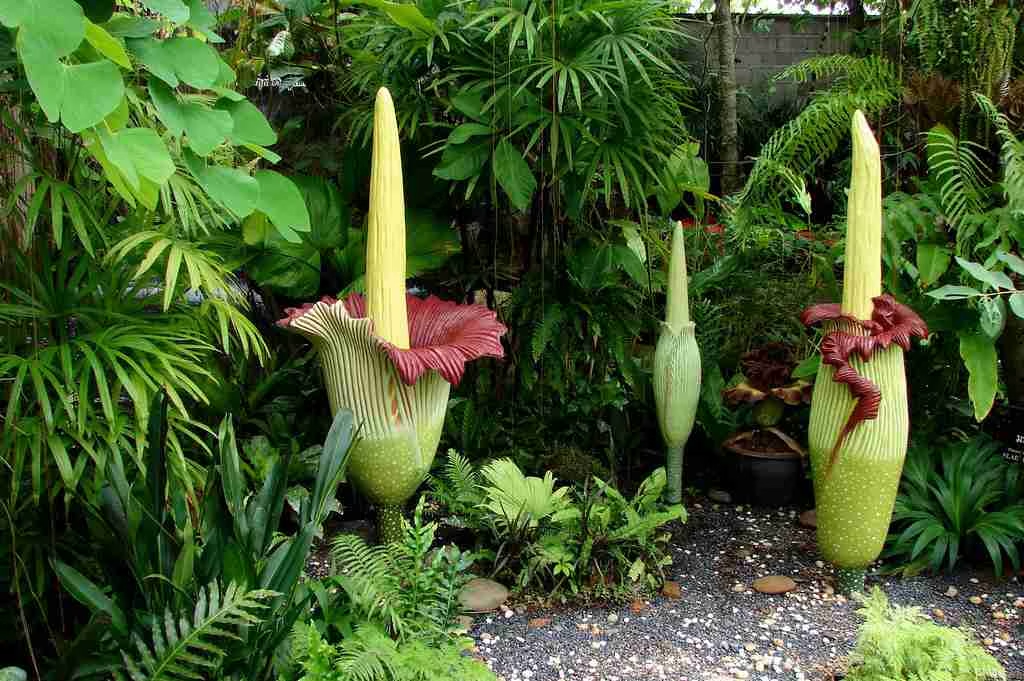
4. The Titan Arum flower smells like rotting flesh to attract pollinators.
READ ALSO: 22 Fun Facts About Venus Fly Traps | Tricky Trappers
The Titan Arum is one of the most fascinating plants in the world due to its unique and pungent bloom. Commonly known as the “corpse flower,” it emits a smell akin to rotting flesh. This foul odor is not just for shock value; it serves a critical purpose in the plant’s reproduction.
The scent attracts pollinators such as carrion beetles and flesh flies, which are drawn to decaying matter. These insects, deceived by the smell, visit the flower and help transfer pollen, ensuring the plant’s pollination.
5. Metrosideros excelsa, commonly known as pōhutukawa, New Zealand Christmas tree.
Metrosideros excelsa, known as the New Zealand Christmas Tree (Māori – pōhutukawa), is a beloved plant both in New Zealand and Australia, celebrated for its brilliant crimson flowers that bloom around Christmas.
This evergreen tree, blooming in December, coincides with the Southern Hemisphere’s summer and holiday season, adding a festive touch to the landscape. The pōhutukawa holds a special place in Maori culture and traditions, symbolizing strength and endurance. Its robust root systems are vital for stabilizing coastal cliffs and preventing erosion.
6. The Baobab tree can store hundreds of liters of water in its trunk.
Known as the “Tree of Life,” the Baobab tree has a remarkable ability to survive in harsh conditions. Its massive, bulbous trunk can reach diameters of up to 30 feet (9 meters) or more. These enormous trunks can store up to 120,000 liters of water, making them vital reservoirs in arid regions.
During the rainy season, the trunk absorbs and holds water, acting like a giant sponge. In dry periods, the tree utilizes this stored water to sustain itself, providing a crucial resource for local wildlife and communities.
7. The world’s oldest tree, a bristlecone pine named Methuselah, is over 4,855 years old.
In the remote White Mountains of California, an ancient survivor stands tall: Methuselah, the world’s oldest tree. This remarkable bristlecone pine is over 4,855 years old, making it one of the longest-living organisms on Earth. Methuselah has withstood millennia of harsh weather, fires, and changes in climate, all while continuing to grow in its high-altitude environment.
Its gnarled and twisted appearance tells a story of resilience and endurance through time. The exact location of Methuselah is kept secret to protect it from vandalism and excessive foot traffic.
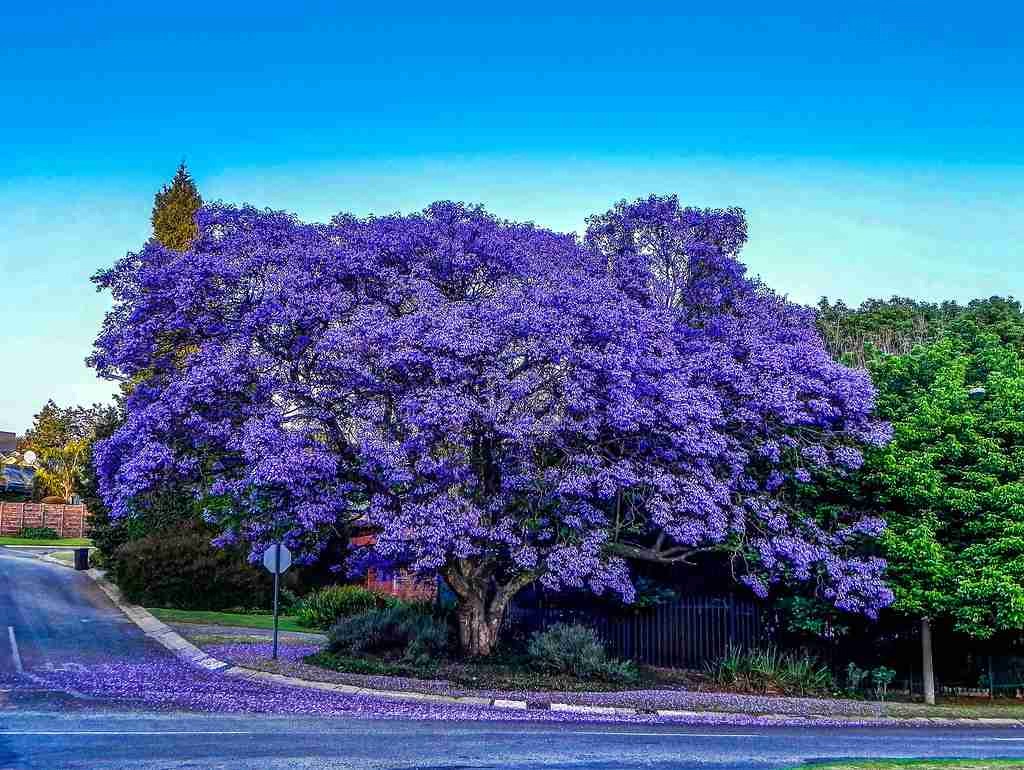
8. The Jacaranda tree explodes with vibrant purple flowers, creating a magical purple carpet when they fall.
READ ALSO: 22 Fun Facts About Weed | Puff, Puff, Past
In spring, the Jacaranda tree bursts into a breathtaking spectacle, covering itself with vibrant purple blossoms. These radiant flowers transform the tree into a dazzling display of color, enchanting all who pass by. As the blossoms eventually fall, they create a magical purple carpet on the ground, adding a whimsical charm to the surroundings.
The fallen petals blanket streets and parks in a surreal, fairy-tale-like scene. Jacaranda trees, often found lining avenues and decorating gardens, are celebrated for their stunning seasonal show, captivating hearts with their ethereal beauty and transforming ordinary landscapes into vibrant works of art.
9. The bark of a cork oak tree is harvested every nine years to produce cork products.
The cork oak tree has a unique ability to regenerate its bark, which is harvested every nine years to produce cork products. This sustainable practice involves carefully stripping the bark without harming the tree, allowing it to grow back and be harvested again.
Cork oak trees can live for over 200 years, providing numerous harvests throughout their lifespan. The harvested bark is used to create a variety of cork products, including wine stoppers, flooring, and insulation materials. This renewable resource is highly valued for its elasticity, buoyancy, and fire resistance.
10. In Japan, forest bathing or Shinrin-yoku is a widespread practice for health and relaxation.
In Japan, the practice of forest bathing, or Shinrin-yoku, is a popular method for health and relaxation. Originating in the 1980s, this activity emerged as a response to the growing dependence on technology. The term “Shinrin-yoku” was coined in 1982 by Tomohide Akiyama, who was the director of the Japanese Forestry Agency at the time.
Forest bathing involves immersing oneself in nature, taking in the sights, sounds, and smells of the forest to reduce stress and improve well-being. This mindful practice encourages people to disconnect from their digital devices and reconnect with the natural world, offering a rejuvenating escape from the demands of modern life.
11. A single oak tree hosts 532 species of caterpillars.
An oak tree stands as a vibrant ecosystem in itself, hosting an astonishing 532 species of caterpillars. Each species plays a unique role in the tree’s biodiversity, feeding on its leaves and acorns and in turn supporting a cascade of life. This diversity not only sustains numerous bird and mammal species but also underscores the oak’s ecological significance.
The leaves, bark, and acorns of oak trees provide a rich tapestry of habitats and food sources for these caterpillars, illustrating the tree’s pivotal role as a cornerstone species in forests.
12. Trees can reduce urban temperatures by up to 10 degrees Fahrenheit through shading and evapotranspiration.
READ ALSO: 23 Fun Facts About Bamboo | Eco-Friendly Giant
Trees play a crucial role in mitigating urban heat by reducing temperatures by as much as 10 degrees Fahrenheit through shading and evapotranspiration. Their leafy canopies provide shade that blocks direct sunlight, lowering surface temperatures in urban areas. Additionally, through evapotranspiration, trees release water vapor into the air, which cools the surrounding atmosphere.
This natural cooling effect helps counteract the heat island effect prevalent in cities, where concrete and asphalt absorb and radiate heat. By strategically planting trees in urban landscapes, cities can create cooler microclimates, improving comfort for residents and reducing the need for energy-intensive cooling systems.
13. The Dragon Blood Tree in Socotra, Yemen, produces a red sap historically used as dye and medicine.
The Dragon Blood Tree, native to Socotra, Yemen, is renowned for its mystical red resin known as dragon’s blood, a substance historically revered and utilized for its diverse properties. This crimson resin, extracted from the tree’s bark and known for its striking color, has been cherished by indigenous Socotran people for centuries.
They used it as a dye for fabrics and as a component in traditional medicines believed to have healing properties. The resin also held spiritual significance, used in rituals and ceremonies to ward off evil spirits and promote well-being. Today, dragon’s blood remains a valuable commodity in global trade, sought after for its natural dyeing abilities and traditional medicinal applications.
14. The African Blackwood tree is so dense it sinks in water.
The African Blackwood tree, renowned for its extraordinary density, is one of the few woods that sinks in water due to its high density and hardness. This dense hardwood, scientifically known as Dalbergia melanoxylon, is prized for its rich, dark color and exceptional durability.
It is commonly used in the crafting of musical instruments, such as clarinets and oboes, where its dense properties contribute to the instruments’ resonance and tonal quality. Beyond musical instruments, African Blackwood is also favored for its use in high-quality furniture and ornamental woodwork, where its density ensures longevity and resilience.
15. Trees can “remember” environmental changes and adapt their growth patterns accordingly.
Trees possess the remarkable ability to “remember” environmental changes and adjust their growth patterns accordingly. This phenomenon, known as phenotypic plasticity, allows trees to respond to shifts in climate, soil conditions, and other environmental factors over their lifetimes. For example, during periods of drought, trees may produce narrower growth rings, indicating slower growth and conservation of resources.
Conversely, in favorable conditions, trees may exhibit wider growth rings, reflecting faster growth rates.
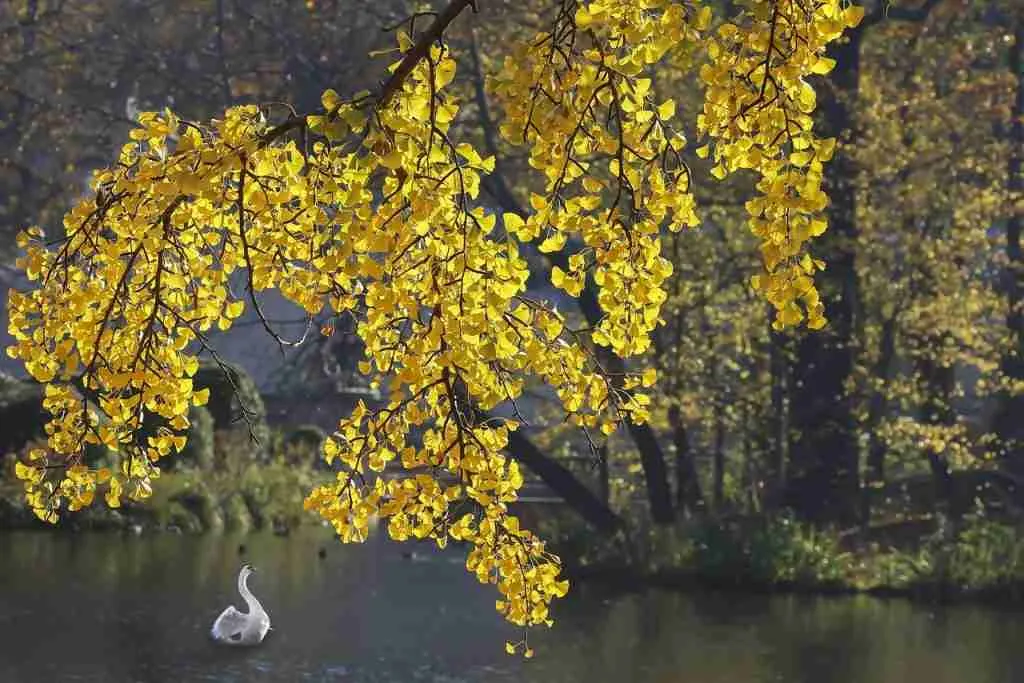
16. Ginkgo biloba trees are considered living fossils, having existed for over 200 million years.
READ ALSO: 26 Fun Facts About Tulips | Discover Floral Joy
Ginkgo biloba trees, often referred to as living fossils, have persisted for over 200 million years. This remarkable species has survived major extinction events and evolutionary changes, remaining relatively unchanged in its fundamental characteristics. Ginkgos are unique among seed plants, with fan-shaped leaves and distinctive reproductive structures.
They have ancient origins dating back to the time of dinosaurs and have been cultivated for their medicinal and ornamental value across different cultures. The resilience and longevity of Ginkgo biloba underscore its significance as a living link to Earth’s prehistoric past, offering insights into the evolution of plants and their adaptation to changing environments over millions of years.
17. Moon Trees were grown from seeds that orbited the moon on Apollo 14 in 1971.
Moon Trees are trees grown from seeds taken into orbit around the Moon, initially by Apollo 14 in 1971, and later by Artemis 1 in 2022. This unique project was first proposed by Edward P. Garriott, who saw it as a symbolic gesture connecting humanity’s exploration of space with environmental awareness.
Seeds from different species, including Douglas fir, sycamore, and sweetgum, were carried aboard spacecraft and later germinated on Earth. The resulting Moon Trees, planted across the United States and other countries, symbolize scientific achievement and space exploration. They serve as living memorials to space missions, inspiring curiosity and environmental stewardship among future generations.
18. Trees block noise by reducing sound waves.
Trees serve as natural barriers that effectively reduce noise pollution by absorbing and deflecting sound waves. Their leaves, branches, and trunks act as acoustic buffers, particularly in urban environments where noise from traffic, industry, and other sources can be disruptive. By absorbing sound energy and diffusing it through their foliage and bark, trees help create quieter spaces and improve the quality of life for residents.
This natural noise reduction not only enhances urban environments aesthetically but also contributes to better health and well-being by reducing stress levels associated with excessive noise. Trees thus play a vital role in mitigating environmental noise pollution, making urban areas more livable and harmonious.
19. Trees can help to reduce stress.
Trees contribute significantly to stress reduction, as highlighted by multiple scientific studies on the calming effects of green spaces. Research has shown that spending time in forested areas can lower cortisol levels, a key stress hormone, more effectively than urban environments.
This natural therapy provided by trees and green spaces helps to alleviate anxiety and promote relaxation. The presence of trees in urban parks and residential areas creates tranquil environments where people can unwind and connect with nature, benefiting both physical and mental well-being.
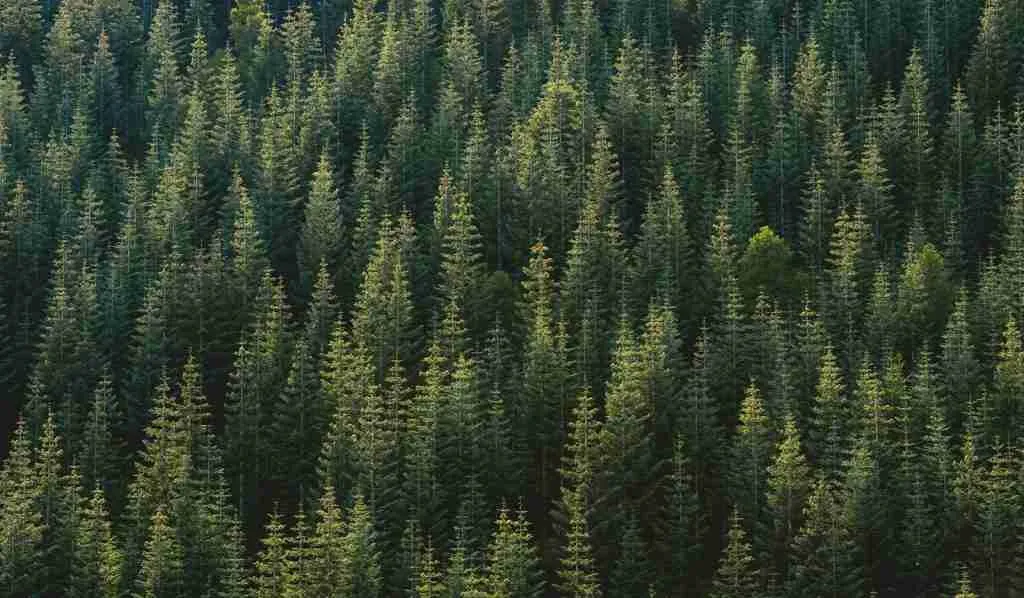
20. There are over 60,000 tree species across the globe.
READ ALSO: 25 Fun Facts About Cherry Blossoms | Blooming Beauty
Across the globe, there are over 60,000 tree species, each with unique characteristics and adaptations to diverse environments. These species vary widely in size, shape, leaf type, and ecological role, ranging from towering rainforest giants to hardy desert survivors. Each tree species plays a crucial role in its ecosystem, providing habitats, food, and oxygen for countless organisms.
The diversity of tree species underscores the complexity and resilience of forest ecosystems worldwide. Conservation efforts focus on preserving this rich biodiversity, recognizing trees’ fundamental importance in maintaining global ecological balance and human well-being.
21. The Wright brothers used the wood from a spruce tree to build the Flyer, their first aircraft.
The Wright brothers utilized spruce wood to construct the Flyer, their pioneering aircraft that made history as the first successful powered flight. This choice of material was crucial for its lightweight yet strong properties, essential for achieving flight amidst the challenges of early aviation.
The spruce wood frame provided structural integrity while keeping the aircraft light enough to achieve lift. This historic use of natural materials highlights the ingenuity and resourcefulness of the Wright brothers in pioneering aviation technology.
FAQS
Evergreen trees retain their leaves throughout the year, allowing them to photosynthesize even in winter. This adaptation is beneficial in nutrient-poor environments where the cost of regrowing leaves each year would be too high. Deciduous trees shed their leaves annually to conserve water and energy during cold or dry seasons, regrowing them when conditions improve.
The tallest tree in the world, a coast redwood (Sequoia sempervirens) named Hyperion, is located in California’s Redwood National Park. Discovered in 2006, Hyperion stands at an impressive height of approximately 379.7 feet (115.7 meters). To protect the tree from potential damage and excessive foot traffic, the exact location of Hyperion within the park is kept a secret.
The tallest Christmas tree in the world is typically erected in Enid, Oklahoma. Known as the u0022Christ Tree,u0022 it reached a height of 140 feet (42.67 meters) in 2021, surpassing other notable tall Christmas trees around the globe. This massive tree is part of Enid’s annual u0022The Oneu0022 holiday celebration, which includes various festive activities and events.
Trees communicate through a complex underground network known as the u0022wood wide web,u0022 primarily facilitated by mycorrhizal fungi. These fungi connect the roots of different trees, allowing them to share nutrients and send warning signals about environmental stresses like drought or pest attacks.
Trees play a crucial role in improving air quality by absorbing pollutants such as carbon dioxide, sulfur dioxide, and nitrogen oxides. Through the process of photosynthesis, trees convert carbon dioxide into oxygen, providing the oxygen we breathe while helping to mitigate climate change.