26 Fun Facts About Birds | Flight with Feathered Marvels
-
The oldest known bird fossil, Archaeopteryx, dates back 150 million years.
-
Some birds can remember the location of over 200 food caches.
-
A flamingo can only eat when its head is upside down.
-
The quail is one of the few bird species that can communicate in “song” during flight.
-
Penguins have knees hidden beneath their feathers.
-
The common raven can live up to 40 years in the wild.
-
Birds are capable of recognizing themselves in a mirror, a trait shared with humans and dolphins.
-
Some birds can switch their vocal sounds to mimic the tone of different species.
-
Some birds, like the bar-tailed godwit, migrate non-stop for up to 12,000 miles.
-
A bird’s heart rate can exceed 1,000 beats per minute during flight.
-
The Australian bowerbird decorates its nest with colorful objects to attract mates.
-
Birds like the Arctic Tern travel across the globe annually to avoid extreme climates.
-
Parrots can live as long as humans, with some species reaching 80 years of age.
-
The kingfisher bird can dive at speeds of up to 25 miles per hour to catch fish.
-
The albatross has the longest wingspan of any bird, reaching up to 12 feet.
Table of Contents
1. Birds originated from a category of dinosaurs known as Theropods.
Birds, the creatures we see flying in the sky and perched on trees, have ancient roots that trace back to a group of dinosaurs called Theropods.
These are the same lineage that gave us the famous T. rex. Imagine that every time you see a sparrow or a pigeon, you’re getting a glimpse of what the prehistoric world was like.
2. Some birds can fly at speeds faster than 200 mph.
The peregrine falcon holds the title of the fastest bird, reaching speeds of over 200 mph when diving for prey. This incredible speed allows the falcon to catch its meals mid-air with astonishing precision.
While the peregrine falcon is the fastest, other birds like the swift also achieve remarkable speeds. These feats of speed enable birds to hunt efficiently and avoid predators with ease.
3. Hummingbirds are the only birds that can fly backward.
Hummingbirds are truly remarkable. Unlike other birds, they possess the unique ability to fly backward.
This agility is crucial for them, especially when they are hovering around flowers, extracting nectar. It’s as if nature designed the perfect helicopter long before humans even thought of it.
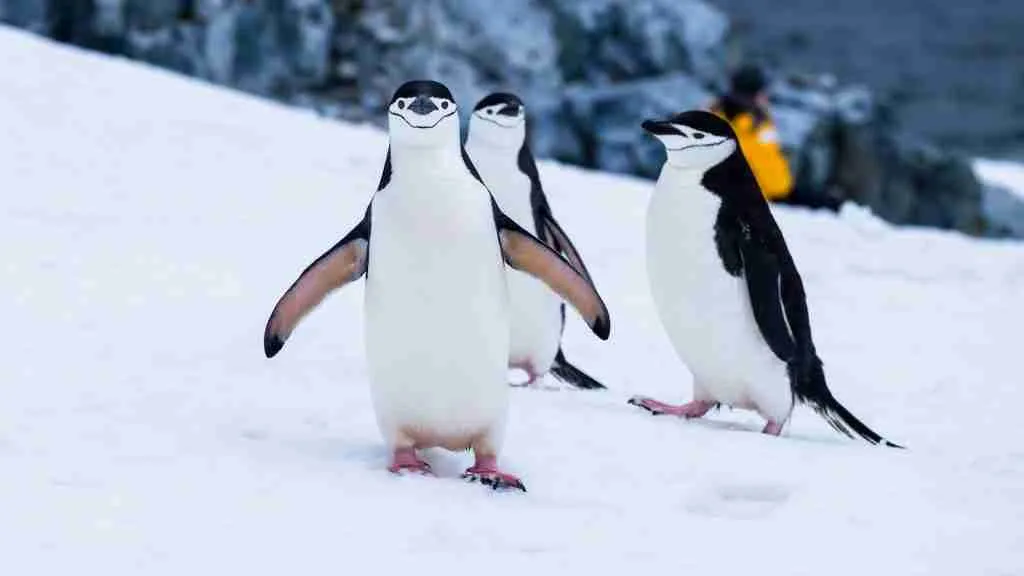
4. Penguins have an extra eyelid to help them see underwater.
READ ALSO: 24 Fun Facts About Penguins You Never Knew
Penguins, the charming birds of the icy world, come equipped with an astonishing feature of an additional eyelid. This isn’t just for show it acts like a built-in pair of goggles.
When they dive deep into the ocean’s depths, this special eyelid helps them see clearly, ensuring they spot their prey and navigate effectively.
5. Some birds can mimic human speech.
Certain species of birds, such as parrots and mynah birds, have the remarkable ability to mimic human speech. They do this by imitating the sounds they hear in their environment, including voices, music, and even mechanical noises.
Parrots, in particular, are known for their ability to mimic complex sentences and sounds. While they don’t understand the meaning of the words, they can associate specific sounds with actions or objects.
6. Some birds migrate over 10,000 miles.
Many bird species undertake long migrations to find food, breeding grounds, or better climates. The Arctic Tern, for example, migrates over 10,000 miles from the Arctic to the Antarctic and back, making it one of the longest migrations of any animal.
During these migrations, birds rely on the sun, stars, and Earth’s magnetic field to navigate. Their ability to travel such long distances with precision is one of nature’s most impressive feats.
7. Some birds can sleep with one eye open.
Many birds are capable of sleeping with one eye open, a behavior known as “unihemispheric slow-wave sleep.” This allows them to stay alert for potential predators while still getting rest.
Unihemispheric sleep also enables birds to remain aware of environmental changes. This is especially important for species living in areas with frequent threats from predators.
8. A bird’s heart beats up to 400 times per minute while resting.
READ ALSO: 26 Interesting Facts About Peacock (The Bird with the Bling)
The bird’s heart is a testament to endurance and efficiency. Even at rest, a bird’s heart thunders away at an astonishing 400 beats per minute.
And when they take to the skies? That rate can skyrocket to an astounding 10,000 beats per minute. Imagine the sheer power and energy packed into such a tiny frame.
9. Some birds migrate thousands of miles without ever taking a break.
Imagine setting off on a journey and not stopping till you’ve covered thousands of miles. Sound tiring? Well, some birds, like the remarkable Arctic tern, do just that.
They fly these vast distances without a single break. Their stamina is awe-inspiring, showcasing nature’s marvels in the tiniest of creatures.
10. Some birds are capable of changing their color.
Certain species of birds, like the male superb lyrebird, can alter the color of their feathers as part of their mating display. These color changes are often achieved through the manipulation of light-reflecting pigments.
In species like the chameleon-like male quail, their plumage can change depending on environmental factors such as temperature. This ability helps birds adapt to their surroundings and attract potential mates.
11. Some birds can fly backwards.
Unlike most birds, the hummingbird has the ability to fly backwards. This is due to its unique wing structure, allowing it to hover in place and move in any direction, including reverse.
This remarkable ability is vital for hummingbirds as they feed on nectar from flowers while hovering. Flying backwards helps them avoid predators and navigate tight spaces with ease.
12. The number of feathers a bird has varies greatly but can range from 1,000 to 25,000.
READ ALSO: 25 Interesting Facts About Toucans That You Didn’t Know
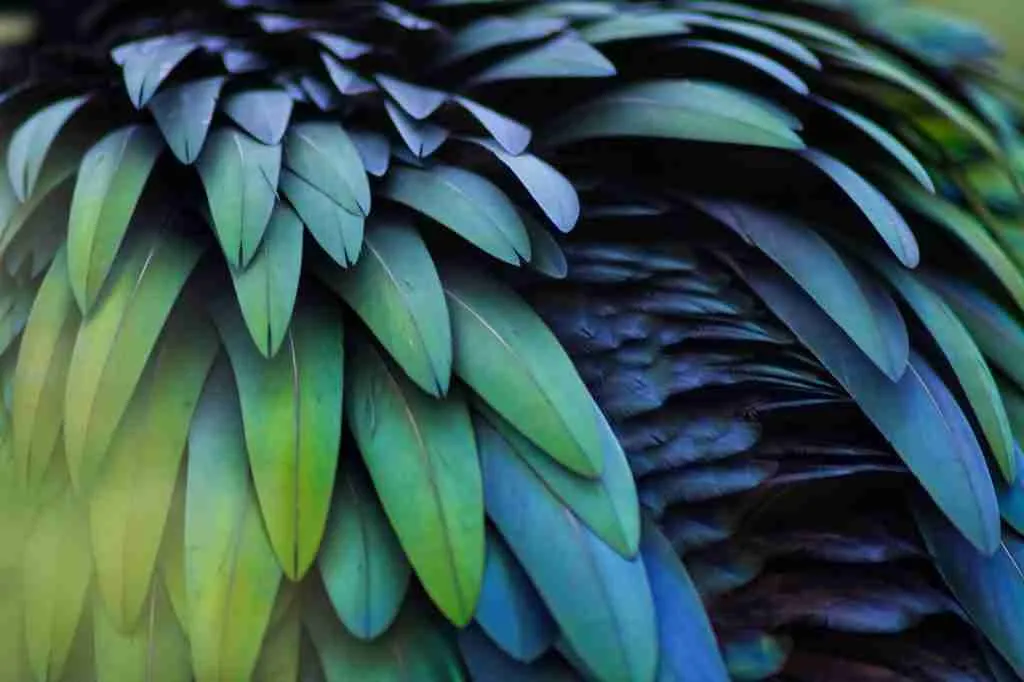
Feathers aren’t just for show they’re a bird’s armor, blanket, and sometimes even an umbrella. And guess what? Birds can have anywhere from a modest 1,000 to a whopping 25,000 of them.
That’s like having a wardrobe ranging from a few essential outfits to a grand fashion collection.
13. Some birds can live to be over 80 years old.
Certain bird species, such as the African grey parrot and the macaw, have remarkably long lifespans, with some living to over 80 years in captivity. These birds can form strong bonds with humans and even have complex personalities.
In the wild, their lifespan is often shorter due to natural predators, diseases, and environmental challenges. However, in captivity, with proper care, they can live to an impressive age.
14. The ostrich is the largest living bird.
The ostrich holds the title of the largest living bird, weighing up to 350 pounds and standing nearly 9 feet tall. Despite being flightless, the ostrich is incredibly fast on the ground, running up to 45 miles per hour.
Ostriches have strong legs built for running and powerful kicks. Their eggs are the largest of any living land animal, weighing about 3 pounds, which is equivalent to about 24 chicken eggs!
15. Flamingos are naturally born with gray feathers.
Despite being associated with vibrant pink feathers, flamingos are actually born with gray plumage. Their pink color comes from the food they eat, primarily algae and crustaceans, which contain pigments called carotenoids.
As they grow, their bodies process these pigments, which are deposited in their feathers, giving them their characteristic pink hue. The more pigments they consume, the pinker they become over time.
16. Birds replace their feathers once or more each year.
READ ALSO: 24 Beautiful Facts About Butterflies You Didn’t Know
Birds don’t wear their feathers out, they renew them. Every year, they undergo a process where they shed old feathers and grow new ones.
It’s nature’s way of ensuring they always have the best gear, be it for flight, warmth, or display.
17. Some birds can fly as high as the altitude of Mount Everest.
The sky isn’t the limit for some birds. They soar to altitudes that would leave us breathless. Take the bar-headed goose, for instance.
It can fly at heights comparable to Mount Everest, navigating the thin air easily and gracefully.
18. The kiwi is the smallest egg-to-body ratio of any bird.
Kiwi birds are famous for their small size and unique characteristics. They lay eggs that are approximately one-quarter of their body weight, which is the largest egg-to-body ratio of any bird.
This unique characteristic means that the mother kiwi has to spend much of her time incubating the egg, which is unusually large for her small body. The egg itself is about the size of a grapefruit, making it a fascinating evolutionary adaptation.
19. Some birds have extraordinary hearing abilities.
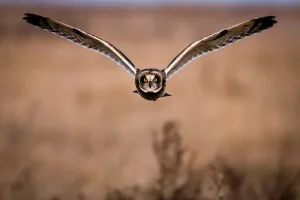
Owls are known for their exceptional hearing, which helps them locate prey in the dark. They can hear even the slightest movements from small animals like mice, even if they are hidden under snow or leaves.
Owls have asymmetrical ears, with one ear positioned higher than the other. This allows them to pinpoint the direction of sounds with great accuracy, making them one of the most efficient nocturnal hunters.
20. Birds don’t have a bladder to store urine. They excrete it with feces.

READ ALSO: 25 Fun Facts About Swans That Will Blow Your Mind
Birds have a unique way of staying light for their airborne lives. Unlike us, they don’t have a bladder to store urine. Instead, they combine it with their feces and expel it together.
It’s an efficient system that helps them remain agile in the sky.
21. The male seahawk can fish for its mate.
The male osprey, also known as the seahawk, is known for fishing for its mate during the breeding season. He catches fish and presents it to the female as part of his courtship ritual, showcasing his skills and providing nourishment.
This behavior not only strengthens the pair bond but also ensures that the female gets the nutrients needed to produce healthy eggs. It’s an impressive example of the role food plays in the mating rituals of birds.
22. Some birds can hold their breath for a long time underwater.
Penguins are among the best divers in the bird world, capable of holding their breath for up to 20 minutes underwater. This adaptation helps them hunt for fish, squid, and other marine life in the icy waters they call home.
While diving, penguins slow their heart rate and use oxygen more efficiently. This ability allows them to cover great distances while searching for food, diving to depths of over 500 feet in some species.
23. Some birds can store food for later use.
Many bird species, including chickadees and woodpeckers, store food in hidden locations to eat later. They gather seeds, insects, and nuts and hide them in tree bark or crevices to provide sustenance during the winter months.
This behavior demonstrates the birds’ ability to plan for the future. They often remember the location of their food caches with remarkable accuracy, using their spatial memory to retrieve their meals when needed.
24. Bird migration paths are often passed down through generations.
READ ALSO: 17 Fun Facts About Owls You Didn’t Know
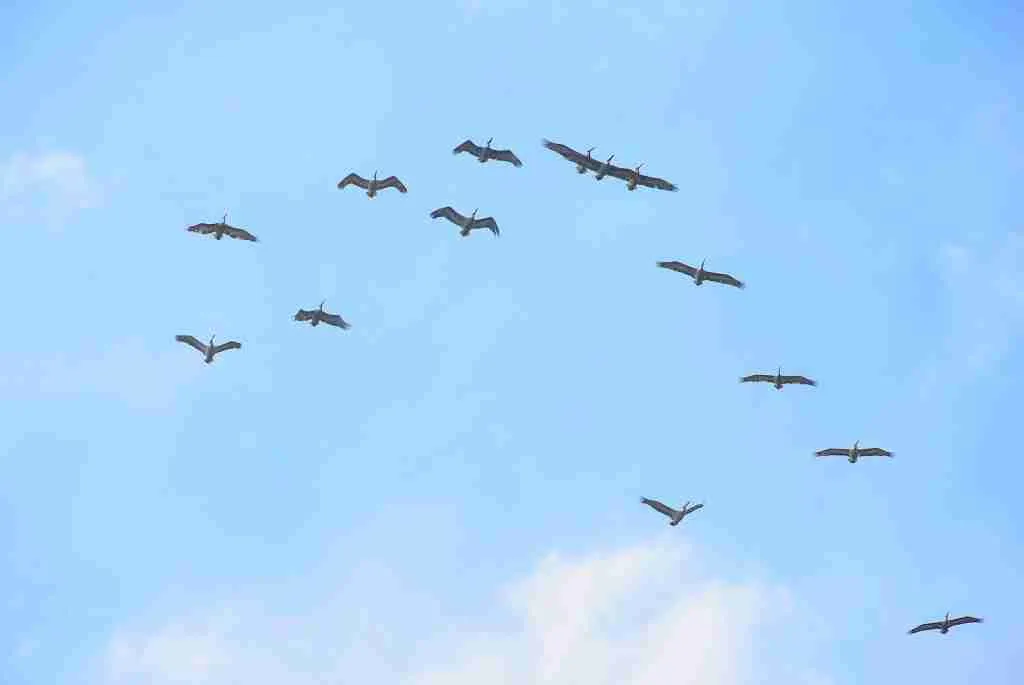
Birds have ancestral maps in their minds. The routes they take during migration aren’t just random; they’re often paths that have been passed down over generations.
It’s like following an age-old family tradition, flying the same sky highways as their grandparents did.
25. Some birds can freeze their bodies in flight.
The common kestrel has the ability to hover in mid-air by freezing its body position. It does this by adjusting its wings and tail to maintain a steady position while it scans the ground for prey.
This remarkable ability allows the kestrel to stay still while flying and spot small mammals or insects. It is an essential skill for hunting in open fields or meadows, where prey can be hard to find.
26. Some birds can change the shape of their beaks.
While birds’ beaks are generally fixed in shape, some species, such as the crossbill, have beaks that can change shape over time. These birds have specialized beaks that allow them to open pine cones and extract seeds more easily.
In certain species, the shape of the beak can evolve or adapt based on the bird’s environment and diet. This flexibility ensures that birds can survive in a variety of conditions, even as their habitat changes over time.
FAQs
Yes, birds are warm-blooded creatures, known as endotherms. This means they maintain a constant body temperature independent of the external environment. Being warm-blooded allows birds to remain active across a range of conditions. It’s a crucial adaptation for flight, migration, and diverse habitats.
Birds have diverse diets based on their species and habitat. Many birds, like robins, eat insects and worms. Some, such as hummingbirds, primarily feed on nectar. Birds of prey, like eagles and hawks, consume small animals. Meanwhile, species like ducks and geese often eat aquatic plants and small aquatic creatures. A bird’s diet is adapted to its environment and physical characteristics.
Birds generally sleep at night, similar to humans. However, the exact timing can vary based on the species and environment. Some birds, like owls, are nocturnal and sleep during the day. Migratory birds can take short naps in flight. Factors like safety, weather, and breeding can influence a bird’s sleep schedule.
The scientific name of birds varies by species. Birds belong to the class Aves, and each species is classified under a unique binomial nomenclature, such as Passer domesticus for the house sparrow.
The rarest bird in the world is the Spix’s Macaw (Cyanopsitta spixii). It was declared extinct in the wild but is now the subject of reintroduction efforts. Native to Brazil, it is known for its striking blue plumage.