25 Fun Facts About Polar Bears | They Aren’t Truly White
-
Their tongue is covered in tiny bumps that help grip meat.
-
They close their nostrils while swimming underwater.
-
Cubs often ride on their mother’s back across thin ice.
-
Polar bears are left-handed hunters in some observed cases.
-
They shake off water like giant dogs after swimming.
-
Some have been spotted using blocks of ice as toys.
-
Polar bear footprints can be almost a foot wide.
-
Their fur can glow slightly under ultraviolet light.
-
They can smell a seal nearly a mile away.
-
Cubs are born with almost no fat layer.
-
Their liver contains so much vitamin A it’s toxic to humans.
-
Polar bears rarely drink water; they get moisture from prey.
-
They walk with a pigeon-toed gait to balance on ice.
-
Males may fast for months while searching for mates.
-
Some polar bears stand over 10 feet tall on hind legs.
Table of Contents
1. Hollow hairs help camouflage polar bears.
Each hair is a clear tube that scatters light. That scattering makes the coat look white against ice and snow.
This look helps them hide while hunting seals. It also reflects light, which reduces heat loss in harsh weather.
2. Polar bears primarily live in the Arctic Circle.
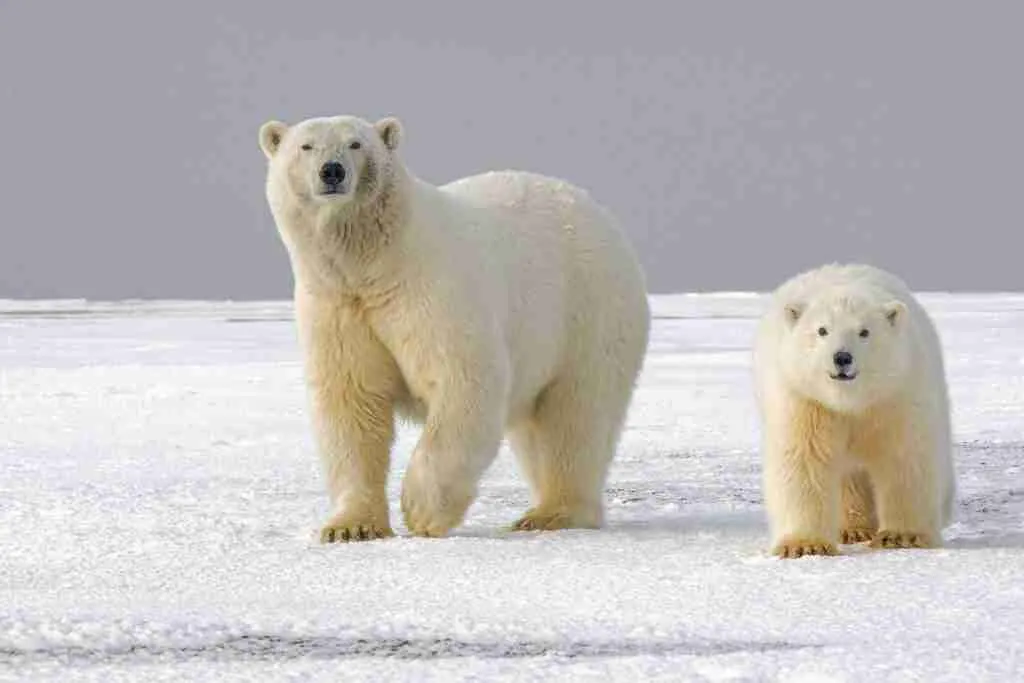
Polar bears primarily inhabit areas within the Arctic Circle, spanning countries like Canada, Russia, Greenland (part of Denmark), and Norway.
These nations are their main stomping grounds, offering vast icy territories for them to roam, hunt, and thrive.
3. Long-distance swims are routine for polar bears.
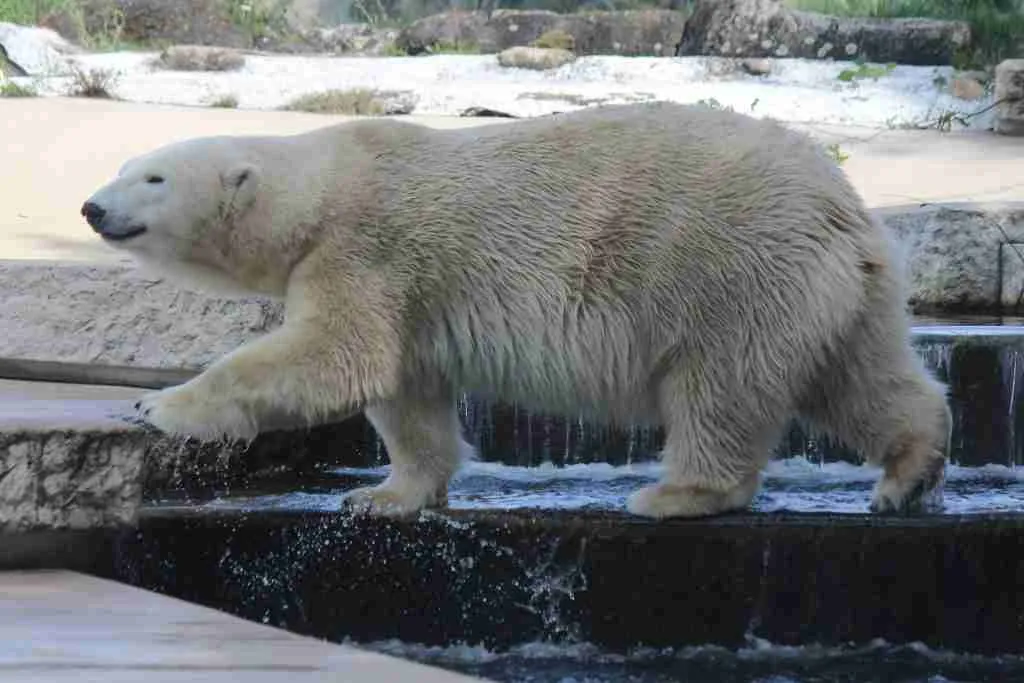
They can swim for hours and sometimes for days. Wide front paws act like paddles, pushing steady through cold seas.
Strong shoulders and a buoyant body aid endurance. Mothers have even been tracked swimming with young over large gaps.
4. Polar bears have black skin underneath their fur.
READ ALSO: 24 Fun Facts About Penguins You Never Knew
Beneath the deceptive cloak of their translucent fur, polar bears hide an unexpected truth their skin is pitch black.
This dark coloration aids in absorbing and retaining heat from the sun, a vital adaptation that helps them stay warm in the frosty Arctic climate.
5. Polar bear cubs weigh just over 1.5 pounds at birth.
When picturing the might and size of adult polar bears, it’s astonishing to learn that their cubs start life weighing 1.5 pounds or so.
This tiny beginning is a stark contrast to their eventual massive size, illustrating the remarkable journey these creatures undergo from vulnerable infants to Arctic giants.
6. Insulating fat layers protect polar bears.
A thick blubber layer stores energy for lean times. It also blocks heat loss during long swims.
Seasonal feeding builds and shrinks this reserve. Healthy fat levels are key to survival across seasons.
7. Wide, furred paws support polar bears on ice.
Large paws spread weight to prevent breaking through thin ice. Short claws provide grip on slick surfaces.
Fur on paw pads reduces slipping during fast moves. It also offers insulation when resting on frozen ground.
8. Polar bears can reach up to 25 mph on land.
READ ALSO: 22 Fun Facts About Pandas | Unleashing the Cuteness
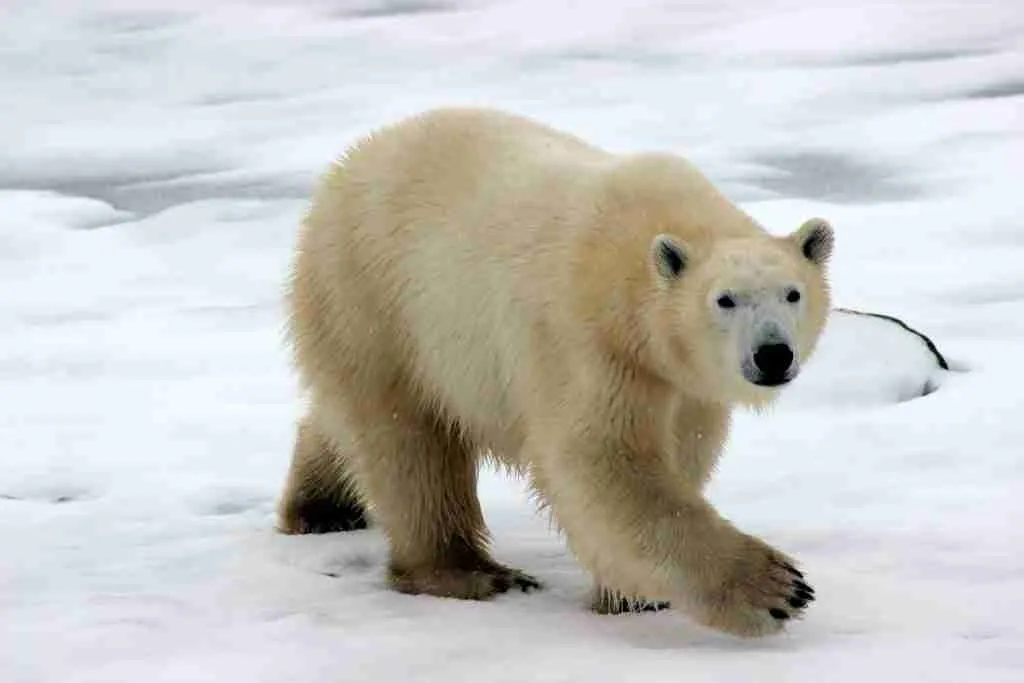
It’s easy to think of polar bears as slow-moving due to their hefty size, but you’d be mistaken. On land, these Arctic giants can achieve speeds of up to 25 mph, which is impressive.
This speed not only aids in hunting but also proves how versatile and agile they can be despite their massive stature.
9. Steady heart rates help polar bears conserve energy.
They rest often and move with purpose between hunts. This habit reduces waste when food is scarce.
Short bursts of speed are saved for key moments. Managing effort keeps them effective across long distances.
10. Twin births are common among polar bears.
Many litters include two cubs, sometimes one or three. Newborns are tiny, blind, and rely on warmth.
Cubs learn to walk on snow soon after leaving. They follow the mother, watching her hunt and travel.
11. First lessons in hunting come early for polar bears.
Cubs practice stalking and pouncing beside their mother. Play builds balance, timing, and careful footwork.
They learn where seals rest and breathe. These early skills decide future success on the ice.
12. Polar bears use an ice-breaking technique with their front paws while hunting.
READ ALSO: 26 Interesting Facts About Peacock (The Bird with the Bling)
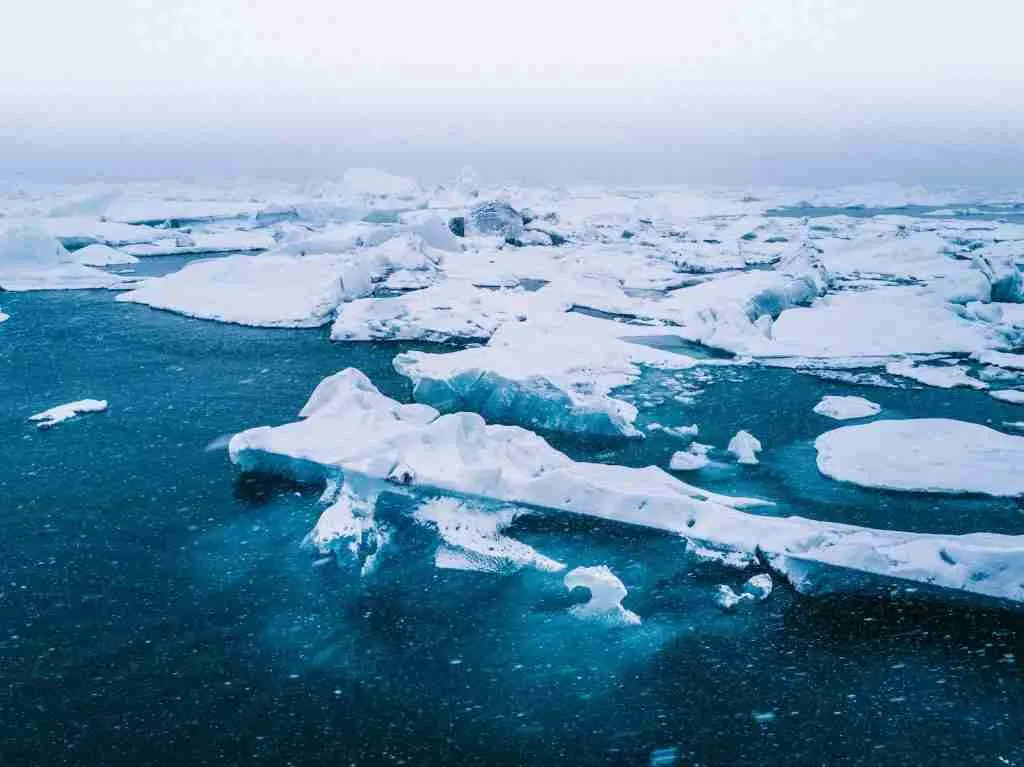
In the vast icy expanses of the Arctic, polar bears have developed a unique hunting method. When they detect a seal beneath the ice, they use their powerful front paws to smash through, creating an opening.
This ice-breaking technique is not just a display of strength but a strategic approach to accessing their primary food source in their frozen habitat.
13. Powerful jaws and teeth equip polar bears for meat.
Canines grip, while shearing teeth slice blubber and flesh. Their skulls are built to handle strong pressures.
They prefer high-fat seal parts for dense energy. Leftovers often feed foxes and gulls nearby.
14. Opportunistic feeding is common for polar bears.
They scavenge whale carcasses or raid bird colonies. Any calorie source helps during lean periods.
Some will test fishing or kelp when options shrink. Flexibility can bridge gaps between successful hunts.
15. Sharp hearing and sight support polar bears in snow glare.
Eyes adapt to bright reflections on ice and water. Ears catch faint seal breaths at openings.
Combined senses sharpen decisions during stalks. Every hint helps judge distance, direction, and timing.
16. A polar bear can consume up to 88 pounds of meat in a single meal.
READ ALSO: 25 Facts About Rainbow Trout You Need to Know
Think of the biggest meal you’ve ever had. Now, compare that to a polar bear’s appetite. In just one sitting, a polar bear can gobble down up to 88 pounds of meat. That’s equivalent to eating over 350 regular-sized burgers in one go.
This massive intake is essential for them. In the harsh Arctic conditions, storing energy is crucial, and these big meals help them do just that.
17. Polar bears can cover 20-40 miles daily when necessary.
The Arctic might seem like an endless stretch of ice, but for polar bears, it’s a landscape to navigate daily. When the need arises, they can traverse an impressive 20 to 40 miles a day.
Whether searching for food or finding suitable territories, their strong limbs and boundless energy make these long treks possible.
18. Seasonal movements track shifting ice for polar bears.
They follow edges where seals surface to breathe. These zones change as temperatures rise or fall.
Some roam far; others stay near coasts. Movement styles reflect local ice patterns and prey habits.
19. Courtship and mating occur on spring ice for polar bears.
Pairs may travel together for days. Males compete, and the strongest usually wins.
Implantation can be delayed until conditions improve. This timing boosts the chance of raising healthy cubs.
20. Polar bears have more problems with overheating than cold.
READ ALSO: 24 Interesting Facts About Bobcats: Fierce & Fuzzy
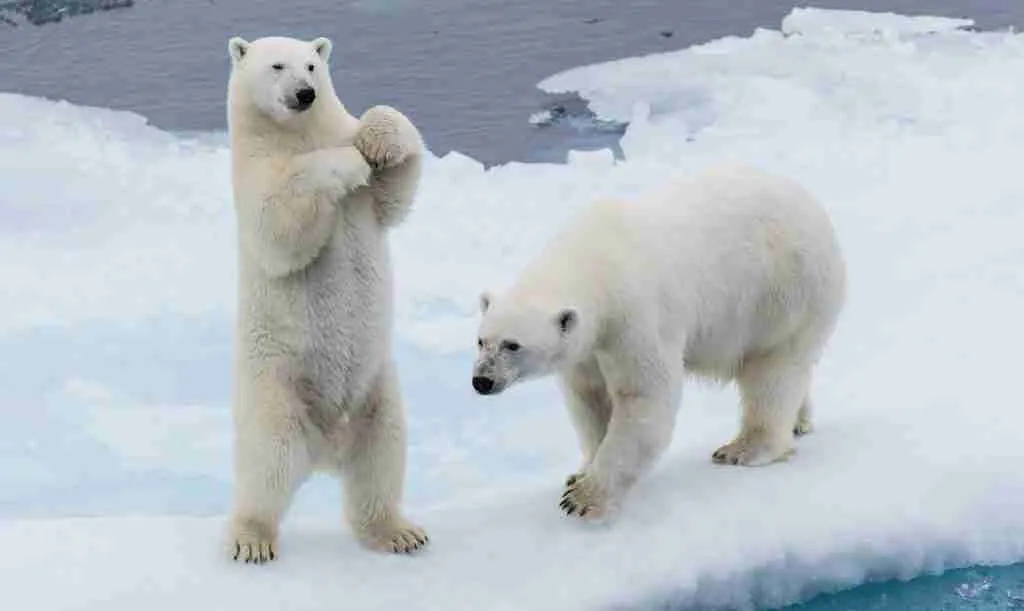
Even though polar bears live in very cold places, they can get too hot easily. This is because they have thick fur and fat to keep warm.
So, instead of feeling too cold, they often feel too warm and need to cool down. It’s like wearing a winter jacket on a sunny day.
21. Thick fur traps air, aiding buoyancy for polar bears.
Air between hairs improves insulation in water. It also adds lift during long swims.
Shaking off water restores insulating power. Clean, fluffed fur keeps warmth close to the skin.
22. Nose printing can identify individual polar bears.
The pattern of bumps and dots is unique. Researchers use photos to match the same bear later.
Noninvasive tracking reduces stress during studies. It helps build life histories over many seasons.
23. Body size shows clear sexual dimorphism in polar bears.
Adult males are much larger than females. Weight can differ by several hundred pounds.
Bigger bodies offer strength during competition. Size also helps in long fights over food.
24. Polar bear cubs stay with their mothers for over 2 years.
READ ALSO: Fun Facts About Cougar- America’s Largest Cat
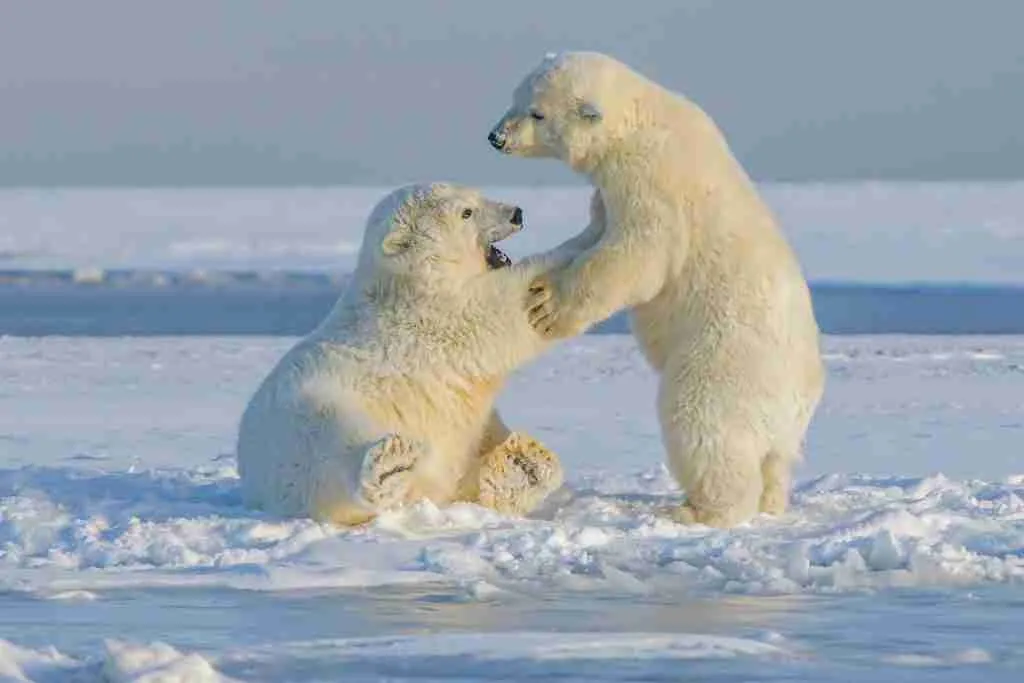
The bond between a polar bear mother and her cubs is deeply touching. After birth, cubs don’t just rush into the icy world on their own.
Instead, they stick close to their mothers, learning and growing under her watchful eye for more than 2 years.
25. Shedding patterns keep coats healthy for polar bears.
Old hairs loosen as seasons turn warmer. New growth restores full insulation for winter.
Clean coats resist water and wind better. Grooming with teeth and claws keeps fibers aligned.
FAQs
Polar bears live mainly in the Arctic Circle across countries like Canada, Russia, Norway, Greenland, and the United States (Alaska). They spend most of their time on sea ice rather than land. This frozen habitat gives them access to seals, their main food source.
Their diet is rich in fat, and seals are their favorite prey. They wait near breathing holes in the ice to catch them. When food is scarce, they may scavenge whale carcasses, eat birds, or try other available sources.
Many polar bears are losing their hunting grounds as Arctic ice melts. This forces them to swim longer distances and sometimes starve. Cubs are also at higher risk because mothers struggle to find enough food.
They are classified as vulnerable due to climate change. Melting ice reduces access to seals, making survival harder. Human activity like oil exploration and pollution also adds threats.
Polar bears are the only bears classified as marine mammals. Their adaptations like thick blubber, hollow fur, and strong swimming skills make them unique. These traits allow them to survive in some of the coldest regions on earth.